What is community based medicine?
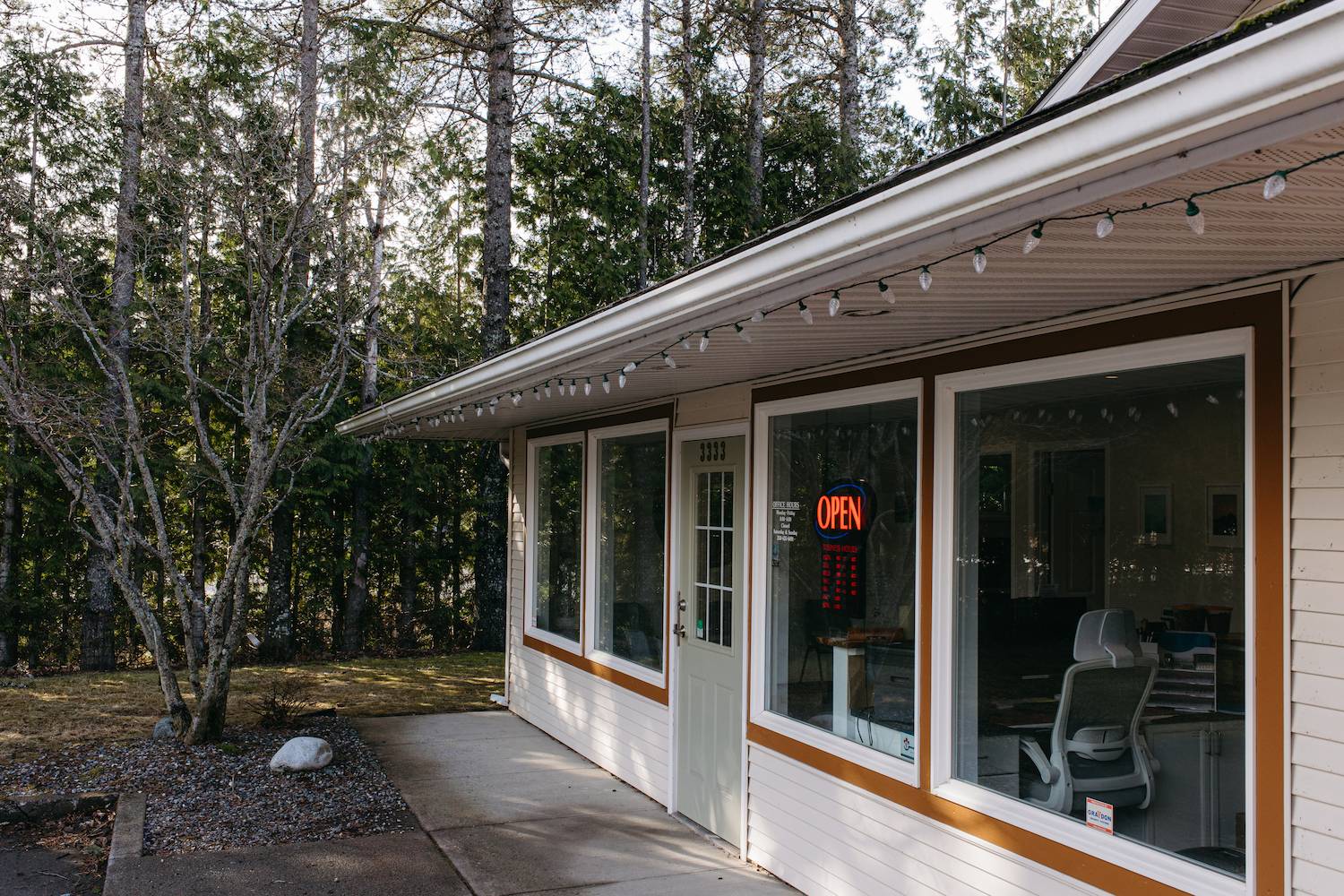
If you've ever walked into a vet clinic and felt like just another appointment on the schedule, you know what community-based medicine isn't.
Community-based veterinary medicine is a way of practicing that puts relationships at the centre of everything. It means your vet knows your animals, knows your land, knows what you're working with, and builds a care plan around your real life rather than a textbook ideal. It's medicine shaped by the people and place it serves.
At Mount Remo Veterinary Services, this isn't a philosophy we had to adopt. It's just how veterinary medicine works when you're embedded in a community like northwest BC.
More Than a Clinic Visit
Traditional veterinary care can sometimes feel transactional. You bring your animal in, receive a diagnosis, follow a treatment plan, and go home. Community-based medicine doesn't throw any of that out, but it adds something important: context.
When your vet understands that you've just taken over the care of an aging parent, or that your senior dog is also your kid's best friend, or that the nearest emergency clinic is hours away, the conversation about care changes. Recommendations become more practical. Communication becomes more honest. Trust gets built over time, not assumed on the first visit.
Research published in Frontiers in Veterinary Science has found that pet owners who feel heard, respected, and included in the decision-making process are significantly more likely to follow through on medical recommendations and seek out care in the future. That finding shouldn't surprise anyone. People engage with systems that treat them like people.
The Spectrum of Care
One of the most important ideas within community-based medicine is what the veterinary profession calls the "spectrum of care." The American Association of Veterinary Medical Colleges defines it as the range of care options that can be provided based on the unique circumstances of each case.
In practice, this means your vet doesn't just offer one path forward. There's often a range of diagnostic and treatment options, from the most extensive (and expensive) to more conservative approaches. The right choice depends on the patient, the owner's circumstances, and what's realistically going to lead to the best outcome for that animal in that home.
This isn't about cutting corners. It's about recognizing that a client who chooses a more conservative option doesn't love their pet any less than someone who pursues every available test. Community-based vets understand this deeply, because they know their clients personally.
The spectrum of care also matters for large animal work. When you're managing herd health on a working farm, the approach has to account for economic realities alongside medical best practices. A good community vet helps you find the intersection.
Why It Matters in Rural and Remote Communities
Rural communities across North America face a well-documented shortage of veterinary services. The AVMA has long advocated for policy solutions to improve access, noting that timely veterinary care is critical not just for individual animals, but for disease prevention, food safety, and the economic stability of agricultural communities.
In a place like Terrace and the surrounding region, this isn't abstract policy. It's the reality of living somewhere where specialized care may require significant travel, and where the local vet clinic plays a role that extends well beyond medicine. Your vet becomes a resource, a sounding board, and sometimes the person you call before you know exactly what's wrong.
Community-based medicine acknowledges that role and leans into it. It means being available, being honest, and being willing to work through problems collaboratively rather than handing down instructions.
What This Looks Like at Mount Remo
For us, community-based medicine shows up in the details. It's in the way we talk through options with you rather than prescribing a single path. It's in the house calls and farm visits. It's in building our resource library so you have good information between appointments. It's in the fact that when you call the clinic, you're talking to people who will remember your name and your animal's history.
It also shows up in how we think about education. A community-based practice doesn't hoard knowledge. We'd rather send you home with a clear understanding of what's going on and what to watch for than have you anxious and uncertain until your next visit.
Northwest BC is home. The animals and families here are our neighbours, and that changes how we show up every day. That's community-based medicine.